The Role of Block and Bleed Gauge Valves in Pressure Instrumentation Systems
February 13, 2026
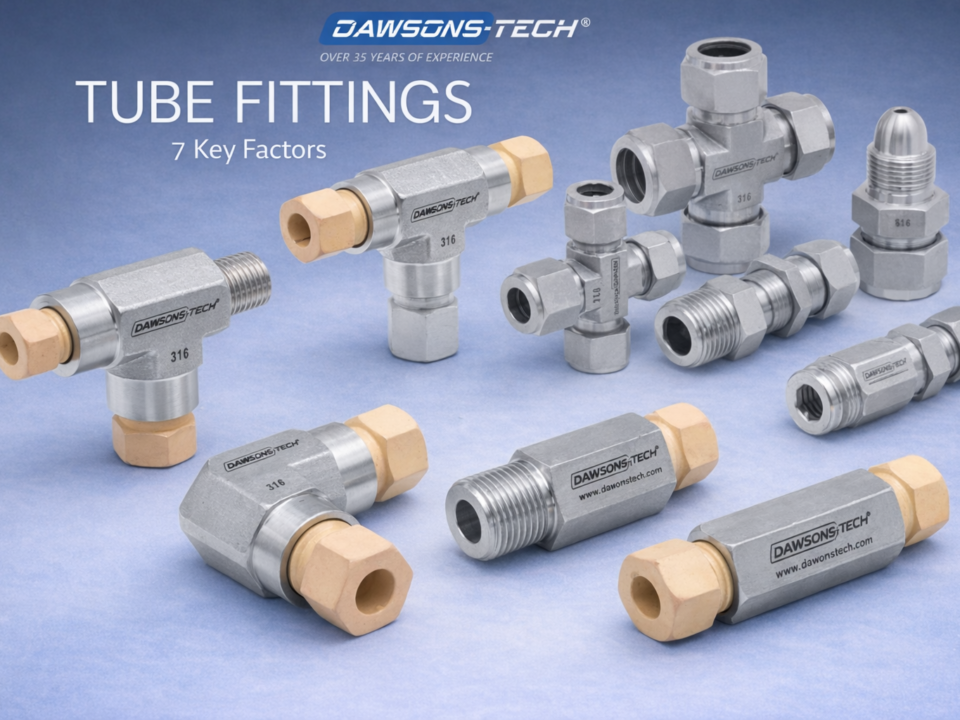
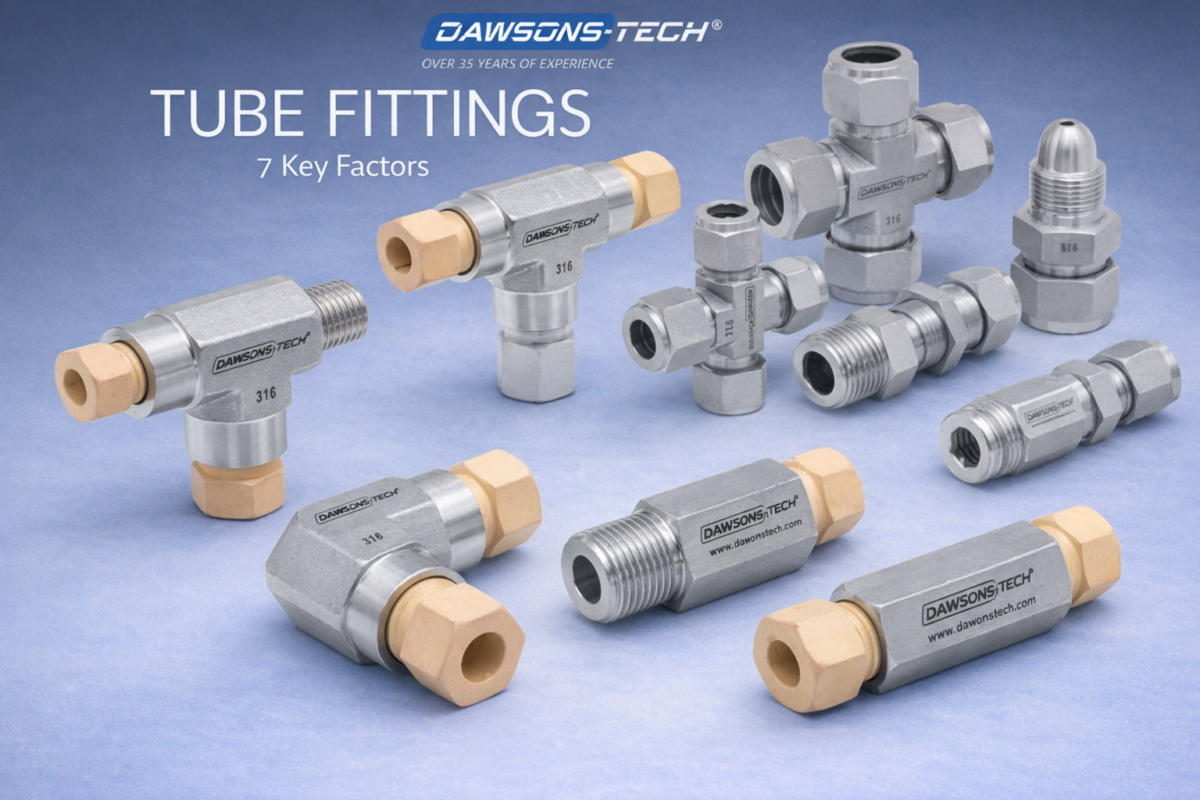
Buying High-Pressure Tube Fittings? 7 Critical Factors Industrial Buyers Must Check
March 23, 2026
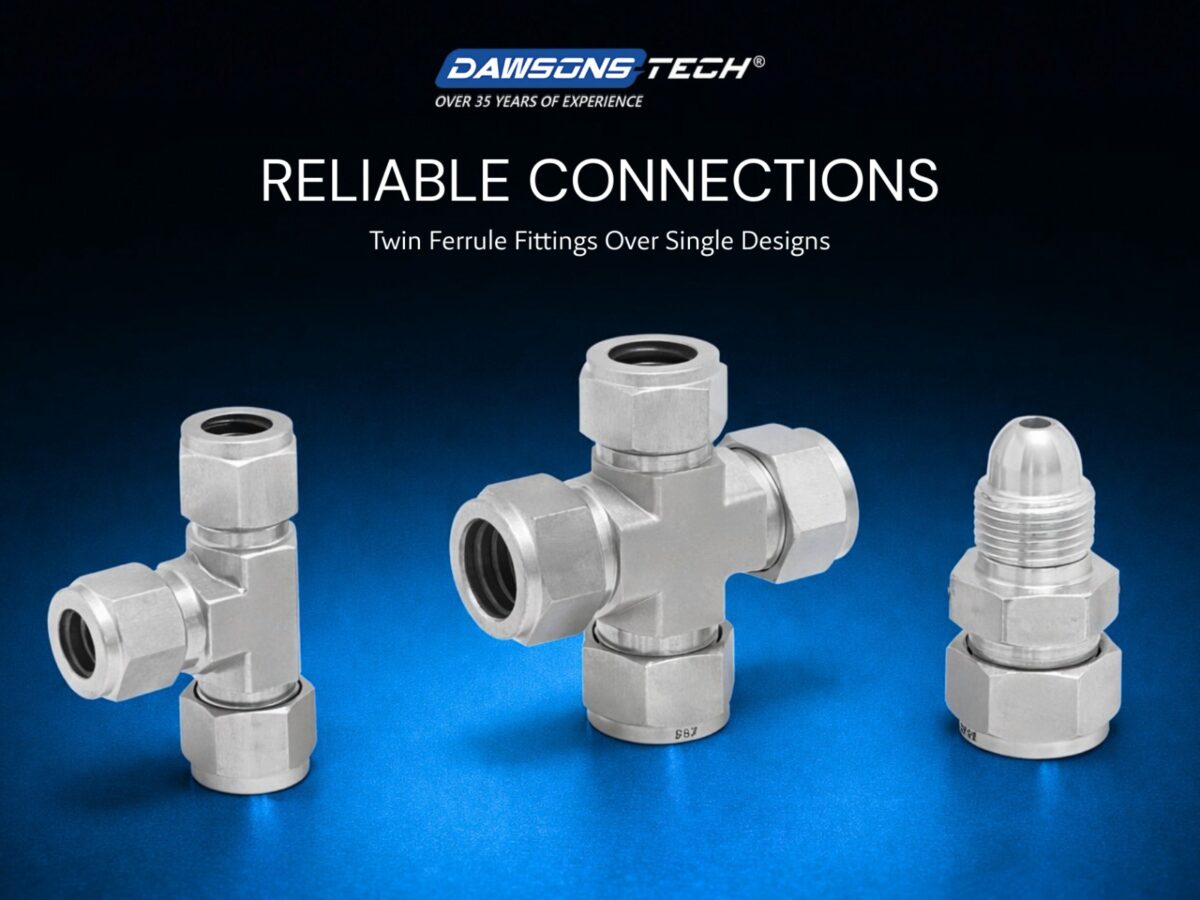
In high-pressure instrumentation systems, even a small connection can determine whether your system performs flawlessly or fails under stress. When it comes to reliable tubing connections in the oil & gas, chemical processing, hydrogen, and power generation industries, twin ferrule tube fittings are widely preferred over single ferrule designs.
For companies like Dawsons Tech, where precision, safety, and global compliance matter, understanding the advantages of twin ferrule fittings is essential. Let’s break it down in simple, practical terms.
What Are Twin Ferrule Tube Fittings?
A twin ferrule tube fitting consists of the following:
- A fitting body
- A front ferrule
- A back ferrule
- A nut
Unlike single-ferrule designs (which use one ferrule to grip and seal), twin-ferrule fittings use two separate ferrules that perform different functions:
- Front ferrule → Provides leak-tight sealing
- Back ferrule → Grips the tube securely and prevents pull-out
This separation of functions is the main reason why twin ferrule systems outperform single ferrule designs in demanding applications.
1. Superior Leak-Tight Performance
In high-pressure systems, leak prevention is critical. A minor leak can cause:
- Production downtime
- Environmental hazards
- Safety risks
- Costly repairs
Twin ferrule fittings create a two-point sealing mechanism. The front ferrule forms a tight seal against the fitting body and tubing, while the back ferrule reinforces the grip.
This design ensures:
- Better pressure integrity
- Enhanced vibration resistance
- Reduced risk of gas or fluid leakage
For industries handling hazardous media, this extra sealing reliability makes a significant difference.
2. Stronger Tube Grip and Anti-Vibration Performance
Industrial environments often involve:
- Continuous vibration
- Thermal cycling
- Pressure fluctuations
Single ferrule fittings rely on one component to both seal and grip, which can reduce long-term stability under vibration.
Twin ferrule designs, however, allow the back ferrule to:
- Flex slightly
- Bite into the tubing
- Provide strong axial hold
This dramatically reduces the chances of tube slippage. For offshore platforms, refineries, and compressor systems, this is a major advantage.
3. Reduced Installation Errors
Installation mistakes are one of the most common causes of fitting failure.
Twin ferrule fittings are designed to:
- Provide controlled ferrule action
- Ensure consistent make-up
- Reduce over-tightening risks
Because the sealing and gripping functions are separated, installation becomes more forgiving compared to single-ferrule systems.
For procurement managers and maintenance teams, this means:
- Faster installation
- Lower rework costs
- Higher reliability across large-scale projects
4. Better Reassembly Capability
In many industrial setups, fittings must be disconnected and reassembled during maintenance.
Twin ferrule fittings:
- Maintain sealing integrity after reassembly
- Preserve ferrule geometry
- Reduce the need for replacement
Single ferrule designs often lose grip strength after multiple uses, increasing replacement frequency.
For businesses focused on lifecycle cost optimization, twin ferrule fittings offer better long-term value.
5. Improved Performance in High-Pressure Applications
In high-pressure instrumentation systems (sometimes exceeding 10,000–15,000 PSIG), fitting performance becomes even more critical.
Twin ferrule designs distribute mechanical load more effectively across two components. This reduces:
- Tube deformation
- Stress concentration
- Risk of blowout
That’s why high-pressure instrumentation valve manufacturers often integrate twin ferrule connections in their systems.
For companies like Dawsons Tech serving global markets, reliability under extreme pressure conditions is non-negotiable.
6. Enhanced Safety in Critical Industries
Industries such as
- Oil & Gas
- Hydrogen systems
- Chemical processing
- Power plants
Require fittings that meet strict international standards and safety requirements.
Twin ferrule fittings support:
- Secure sealing in corrosive environments
- Compatibility with stainless steel and exotic alloys
- Compliance with international pressure regulations
In critical systems, safety margins matter. Twin ferrule fittings simply provide a higher confidence level compared to single ferrule alternatives.
7. Long-Term Cost Efficiency
While single ferrule fittings may appear cost-effective initially, long-term operational costs often tell a different story.
With twin ferrule systems, companies benefit from:
- Fewer leaks
- Lower maintenance frequency
- Reduced downtime
- Longer service life
For engineering teams focused on total cost of ownership (TCO), this makes twin ferrule fittings the smarter investment.
Twin Ferrule vs Single Ferrule: Quick Comparison
| Feature | Twin Ferrule | Single Ferrule |
| Sealing Performance | Excellent | Moderate |
| Vibration Resistance | High | Limited |
| Reusability | Strong | Often reduced |
| Tube Grip | Superior | Basic |
| High-Pressure Suitability | Ideal | Limited |
Read more : The Role of Block and Bleed Gauge Valves in Pressure Instrumentation Systems
Why Global Industries Trust Twin Ferrule Technology
Across North America, Europe, and Asia, twin ferrule tube fittings have become the industry standard for precision instrumentation systems.
Their ability to:
- Maintain leak-free performance
- Withstand harsh industrial conditions
- Ensure consistent installation
- Deliver long-term durability
Makes them the preferred choice for engineers and procurement specialists.
For Dawsons Tech, offering high-quality twin ferrule tube fittings aligns perfectly with the demands of modern industrial projects where safety, compliance, and reliability are critical.
Final Thoughts
When choosing between twin ferrule and single ferrule tube fittings, the decision ultimately comes down to performance, safety, and long-term reliability.
Twin ferrule designs provide:
- Stronger grip
- Better sealing
- Improved vibration resistance
- Greater lifecycle value
In high-pressure and critical instrumentation systems, these advantages are not optional; they are essential.
If your project requires dependable, high-performance tube fittings built for demanding environments, twin ferrule technology remains the preferred solution.